

What “genuine” means when buying auto parts
When you search for genuine auto parts Australia, the wording can sound more definitive than it is. Sellers may use “genuine,” “OEM,” and “aftermarket” to describe different things, and the distinction matters when you compare price, origin, and fit. Start by asking what the label means for the specific part you need. Then confirm that the part number and vehicle fitment match your car.
Genuine, OEM, and aftermarket parts compared
A genuine part is generally sold under a vehicle maker’s brand, while an OEM part is associated with a supplier that makes parts for vehicle manufacturers. Aftermarket parts are made for replacement use outside that branded supply channel. These labels do not tell you everything about an individual part, so use them as a starting point rather than proof of quality or compatibility.
| Term | Common use | What to confirm |
|---|---|---|
| Genuine | Part sold under the vehicle maker’s brand | Packaging, source, and part number |
| OEM | Part associated with an original equipment supplier | Whether the maker or seller confirms the exact specification |
| Aftermarket | Replacement part sold outside the vehicle maker’s branded range | Manufacturer, application, and fitment details |
| Used | Previously installed or recovered part | Condition, provenance, and return terms |
The terms can overlap in everyday listings, and their use is not always consistent between sellers. Ask for the exact part number and a clear description of its source before treating one label as a guarantee.
How vehicle manufacturers and parts suppliers use these terms
Manufacturers, parts suppliers, and retailers may describe the same supply chain from different points of view. One seller may use “OEM” to identify a maker, while another uses it more loosely to suggest a connection to original production. If the distinction affects your decision, ask who made the part, how it is supplied, and what documentation is available.
Why packaging and branding alone may not prove authenticity
A branded box or convincing label can be useful evidence, but it does not independently establish that a part is authentic. Packaging can be replaced, labels can be copied, and genuine-looking parts may still be wrong for your vehicle. Consider the seller, part number, and supporting records together; several matching details provide a stronger basis for checking than appearance alone.
Identify the right part for your vehicle
A correct part has to match the particular vehicle, not just its badge or broad model name. Model generations can span production changes, and a single model year may have different engines, trims, or equipment. Gather the vehicle details before you compare listings, and check them again before ordering.
Use the VIN to narrow down compatible parts
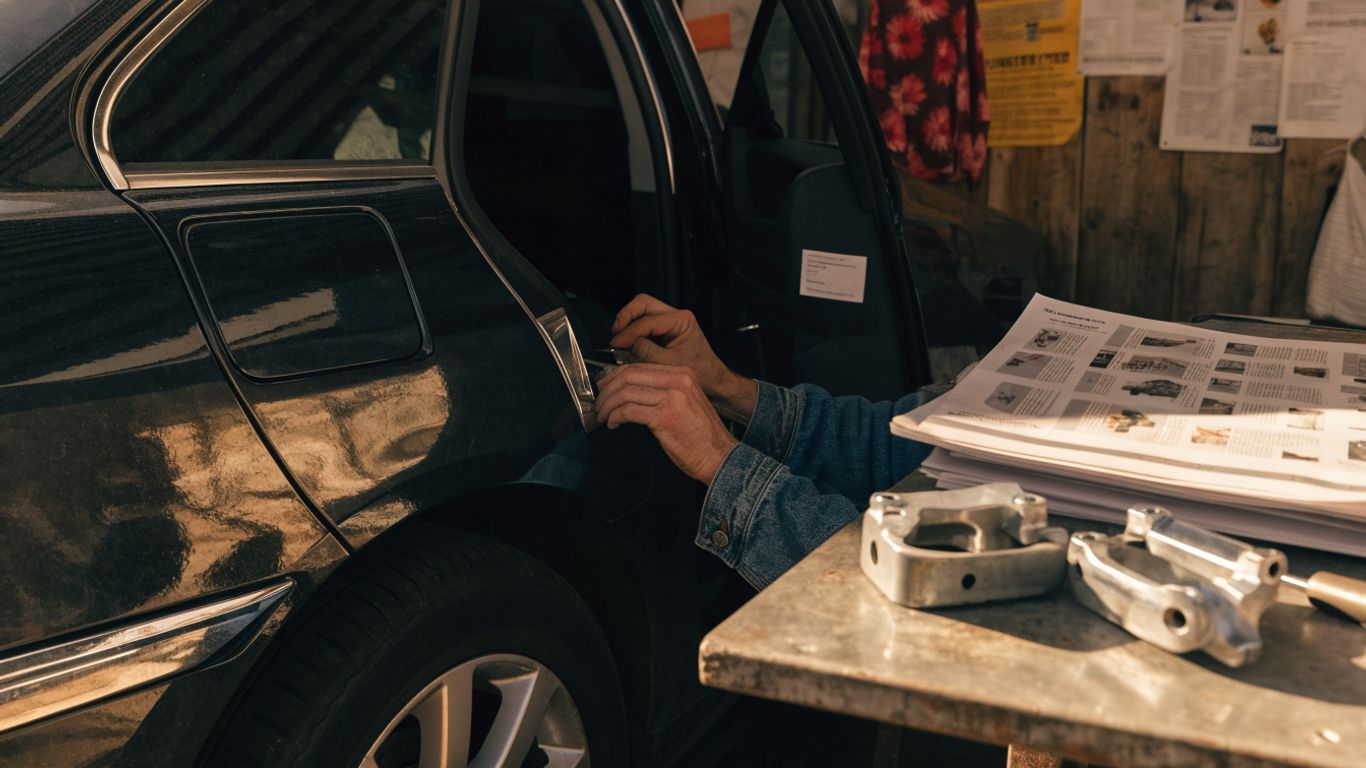
The vehicle identification number can help a parts supplier distinguish between versions of a model. Share it through a seller’s appropriate enquiry channel rather than guessing from a registration or model badge alone. A VIN helps narrow the search, but ask the seller to confirm the actual part and fitment before purchase.
Check model year, engine, trim, and production date
Record the model, model year, engine, trim, and production date if available. Two vehicles that appear identical may use different components because of an engine option, a mid-year update, or a market-specific specification. When the listing asks for these details, answer as precisely as you can and do not assume that the year shown on registration is the production year.
Match part numbers and superseded part references
Compare the number printed on the existing component or in reliable vehicle records with the number supplied by the seller. Some parts are replaced by a newer reference, so a different number is not automatically a mismatch; ask whether the seller can confirm that the reference supersedes the one you have. Keep a written record of the numbers checked so you can resolve a discrepancy before fitting.
Confirm fitment with a qualified parts specialist
If you are unsure, a specialist can check the vehicle details against the part listing. Just Kias supplies Kia genuine, used, and aftermarket parts and offers direct phone support for parts advice and fitment questions; you can call 1800 595 454. Sharing the VIN and any existing part number makes that conversation more useful, but ask for confirmation of the specific item before placing an order.
Choose a reliable Australian seller
A well-presented listing is only one part of a reliable purchase. You also want to know who is taking the order, how to reach them, and what happens if the part is not as described. Compare the seller’s information with the product details rather than relying on a polished storefront by itself.
Look for clear business and contact details
Check that the seller provides a clear business identity and practical contact options. A phone number or enquiry channel matters when you need to clarify fitment, stock, or a return. Just Kias is a Kia parts supplier with phone support for Australian vehicle owners, and its Kia parts range includes engines, motors, transmissions, gearboxes, and body parts.
Check whether the seller is an authorised dealer or distributor
If a seller claims to be an authorised dealer or distributor, ask what that status covers and whether it applies to the part you are considering. Do not infer authorization from a logo or a vague phrase such as “dealer quality.” For general context on supplier networks, this overview of automotive parts distribution describes the activity of parts distributors and service centers across regions.
Review product descriptions, photos, and return terms
A useful listing identifies the part clearly and gives enough detail for you to check whether it suits your vehicle. When you review a listing, look for these details:
- The part number or an explicit note that it is not available
- The vehicle models, years, engines, or trims it is intended to fit
- Whether the item is new, used, or aftermarket
- Photos and a clear explanation of the seller’s return terms
If an important detail is missing, ask before buying rather than filling the gap with an assumption. Return terms are especially worth reading before ordering a used or vehicle-specific component.
Assess customer reviews without relying on ratings alone
Ratings can help you spot recurring concerns, but a star score does not verify a part’s origin or fitment. Read a sample of detailed reviews and look for comments about communication, delivery, and how problems were handled. Treat reviews as one input among several, alongside the seller’s answers and written policies.
Verify a part before and after purchase
Verification is a process that starts with the listing and continues when the parcel arrives. Keep the invoice, order confirmation, and any written fitment advice so you can refer to what was promised. If there is a mismatch, those records make it easier to explain the issue clearly.
Request documentation for the part’s origin
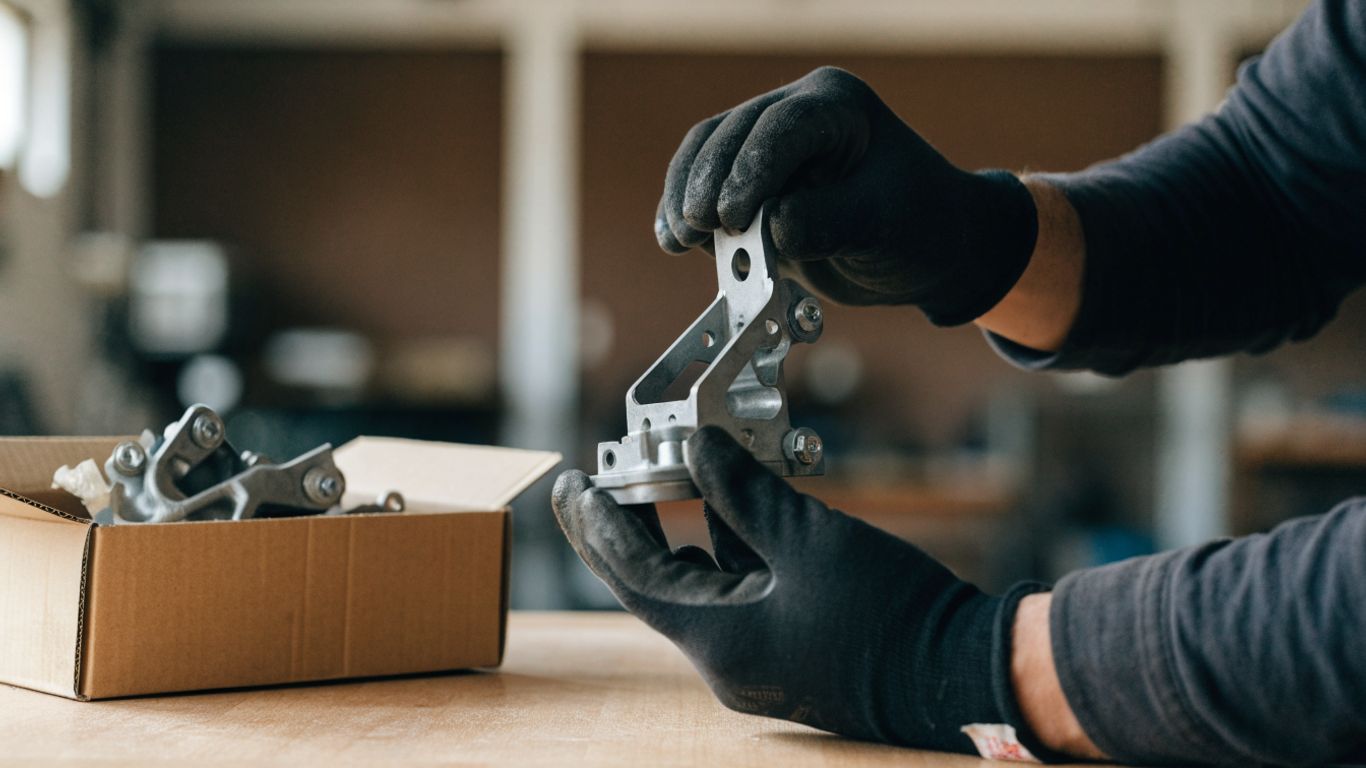
Ask what documentation the seller can provide about the part’s origin, especially when the listing makes a claim about its source. The available records will vary by seller and by whether the item is new or used. Save the response with your order details instead of relying on a verbal assurance alone.
Inspect packaging, labels, serial numbers, and part numbers
When the part arrives, check the outer packaging for damage before opening it, then compare any labels, serial numbers, and part numbers with your order. A missing or unfamiliar mark is a reason to ask questions, not conclusive proof of a counterfeit. Take clear photos if something differs or appears damaged, and avoid installing a part while a material discrepancy remains unresolved.
Compare the part with manufacturer or dealer references
Use a trusted parts reference or ask a qualified parts specialist to check the number and description. Compare the delivered item with the reference, not only with the old component, since a legitimate replacement may have a revised design or superseding number. If those references conflict, pause and ask the seller to explain the difference in writing.
Ask what to do if the item arrives damaged or does not match
Before fitting a part that looks wrong or has been damaged in transit, contact the seller and follow its stated process. Find out whether you should retain the packaging, provide photographs, or arrange an inspection. Keep the part in its received condition until you know what steps are needed for a return or claim.
Understand pricing, shipping, and warranty coverage
The cheapest advertised price may not be the lowest overall cost once shipping, fitment risk, and warranty terms are considered. Compare like with like: the same part reference, condition, and specification. A written quote also helps you check what is included before you commit.
Compare quotes for the same part and specification
When comparing prices, make sure each quote refers to the same part number or confirmed replacement, and note whether the part is genuine, used, or aftermarket. Ask whether taxes, freight, and any other charges are included in the total. For Kia owners, Just Kias offers genuine, used, and aftermarket parts to suit different repair needs; confirm the exact item and quoted price directly with the seller.
Check shipping costs, delivery estimates, and stock status
Ask whether the part is physically in stock, when it is expected to dispatch, and what delivery estimate applies to your address. Delivery time can depend on location and freight arrangements, so treat an estimate as a guide unless the seller confirms a firm date. Just Kias provides Australia-wide freight, so customers can ask about delivery arrangements for their location before ordering.
Review warranty length, exclusions, and claim requirements
Warranty coverage varies by seller and part. Read the written terms for the length of cover, exclusions, and steps required to make a claim; also ask whether installation or inspection requirements apply. Keep the invoice and any fitting records, since the seller may ask for them when assessing a claim.
Clarify return costs for incorrect or incompatible parts
Find out who pays return freight if a part is incorrect, damaged, or incompatible, and whether the seller requires approval before you send it back. Ask how the policy treats an item ordered using vehicle details you supplied. A clear answer before purchase can prevent an avoidable dispute later.
Avoid common buying risks
Careful checking is especially useful when a listing has limited information or a price that seems far below comparable offers. A low price is not proof of a problem, but it is a reason to ask what condition the part is in and what the seller’s terms cover. Slow down whenever the answers are incomplete or inconsistent.
Spot listings with vague descriptions or unusually low prices
A listing that omits a part number, condition, or fitment information leaves too much for you to guess. Ask for the missing details and compare the response with the product description and any photos. If the seller cannot clarify a basic specification, consider whether you have enough information to buy confidently.
Be cautious of counterfeit, refurbished, or misrepresented parts
A part described as genuine may still need its source confirmed, and a refurbished or used item should be described as such. Ask direct questions about condition, repairs, and what evidence supports the listing’s claims. Do not treat neat packaging, a broad compatibility claim, or a low price as sufficient verification.
Confirm import duties and warranty limits for overseas orders
For an overseas order, ask which charges may be payable on arrival and who is responsible for them. Also check whether the warranty can be claimed from Australia and who handles return freight if something goes wrong. These details can change the effective cost, so confirm them before paying rather than assuming the advertised price is the final amount.
Get professional advice for safety-critical components
For components that affect braking, steering, suspension, or other safety-related systems, have a qualified professional confirm the part and installation requirements. If a part appears damaged or does not match its reference, do not fit it while the question is unresolved. A careful check before installation is simpler than trying to diagnose a problem afterward.
Conclusion
Choosing genuine auto parts in Australia starts with clear vehicle details and continues through seller checks, part-number verification, and a careful review of shipping and warranty terms. Ask specific questions, keep the answers and order records, and pause if the listing or delivered part does not match what you were promised. That steady approach helps you choose a part that fits your vehicle and your repair needs.
Frequently Asked Questions
What does “genuine” mean for auto parts?
It commonly refers to a part sold under a vehicle maker’s brand, but the term alone does not verify the source or fitment. Ask the seller what it means for the specific item and request the relevant part number or documentation.
Are OEM parts the same as genuine parts?
Not necessarily. “OEM” often refers to an original equipment manufacturer or supplier, while “genuine” commonly describes a part sold under the vehicle maker’s brand. Usage can vary, so confirm the maker, specification, and source of the part you are considering.
How can I check whether a part fits my car?
Provide the seller with the VIN and confirm the model, year, engine, trim, and production date where possible. Compare the part number with a trusted reference and ask a qualified specialist to confirm any superseded number.
Does a branded box prove a part is authentic?
No. Packaging and labels can help with inspection, but they are not proof by themselves. Consider the seller, part number, documentation, and fitment information together.
What should I check before ordering a used part?
Ask about the item’s condition, known repairs, part number, fitment, and return terms. Request clear photos and keep the seller’s answers with your order records.
What should I do if the delivered part does not match the listing?
Do not install it while the discrepancy is unresolved. Photograph the item and packaging, retain the order details, and contact the seller to follow its return or claim process.
What costs should I compare besides the part price?
Compare freight, any applicable import charges, warranty terms, and possible return costs. Check whether each quote covers the same part specification and condition so the totals are meaningfully comparable.


