

Choose the right auto parts expert
A useful parts conversation starts with someone who understands the vehicle and the sort of repair you’re dealing with. Before you call, check whether the person can discuss your make and model, explain the choices available, and help narrow down fitment. If you’re looking for someone to talk to auto parts expert Australia-wide, a little preparation can make the first conversation much more productive.
Look for experience with your vehicle make and model
Parts can vary between models, years, and vehicle versions, so ask whether the expert regularly handles your make and model. If you own a Kia, focused Kia knowledge may help you ask more precise questions about the part you need. You can also consider the same practical screening used when choosing a development partner: look for experience that matches the job, rather than relying on a general claim of expertise.
Check whether the expert handles genuine and aftermarket parts
Ask what kinds of parts they can source, and whether they can discuss the trade-offs between genuine, aftermarket, and used options. That conversation is more useful when the expert can explain the available choices without assuming that the most expensive option is automatically the right one. For Kia owners, Just Kias supplies Kia engines, motors, transmissions, gearboxes, and body parts.
Confirm they can help with your type of repair or replacement
Be clear about whether you need a replacement part, are comparing options, or are trying to identify something that has failed. An expert who understands the part category can help you focus the conversation on the details that matter, such as its location and identifying numbers. For a broader service decision, an auto repair shop marketing guide covers a different topic; keep your parts enquiry focused on the vehicle and component in front of you.
Prepare your vehicle details before you call
A few accurate vehicle details can save time and reduce the chance of discussing a part for the wrong version. Gather what you can before you call, but don’t worry if you cannot find every detail straight away. A specialist can tell you what else would help. Keep your notes nearby so you can answer follow-up questions without having to search around.

Find your VIN, registration, and model year
Start with the vehicle identification number (VIN), registration, and model year. The VIN is especially useful when model names alone do not distinguish between versions, while registration may help identify the vehicle in an enquiry. Write the details down as they appear rather than relying on memory.
A short call note can keep the key information together:
- VIN, if available
- Registration and model year
- Make and model
- The part you are trying to identify
With those details in one place, you can give a clear starting point and add more information if the expert asks. If your online research takes a detour, remember that pages about Main Street Roasters, Chef Sakshi Ahluwalia, and Miami luxury condos concern entirely different subjects; keep the vehicle information and the parts enquiry together.
Note the engine size, trim, and transmission
The engine, trim, and transmission can help distinguish between variants that share a model name. Check your vehicle documents or owner’s manual if you are unsure, and tell the expert when a detail is uncertain rather than guessing. Mention any major changes or modifications that could affect the part you need.
Take photos of the part and its identifying numbers
A clear photo can make it easier to describe a part, especially if you do not know its name. Photograph the part in place if that shows where it fits, then take a closer image of any label, stamped number, or connector. Good lighting and a steady, close view are more helpful than a large collection of blurry pictures.
Describe the part and the problem clearly
You do not need to know the technical name of every component to explain what you need. Start with what you can see, where the part is fitted, and what has changed. Then give the expert time to ask questions; a short, accurate description is often more useful than a confident guess about the cause.
Explain where the part fits and what it does
Describe the part’s location using simple landmarks, such as front or rear, left or right, inside or outside, or near a particular assembly. If you know what the part does, explain it in everyday terms. For example, say that a panel is damaged or that a component connects to a particular assembly, rather than naming a part you are not sure about.
Share any symptoms or damage you have noticed
Mention what happened and when you first noticed it. A sound, warning light, leak, impact, or visible break can help set the context, but it does not prove which part has failed. Explain whether the problem is constant or intermittent and whether it appeared after a repair or an incident.
Mention previous repairs or parts already replaced
Tell the expert about recent work on the vehicle and any parts that have already been replaced. That information can prevent you from repeating an unsuccessful order and may help identify a related component that needs checking. If you have an invoice, old part, or workshop note, keep it close while you talk.
Confirm the part is compatible
A part that looks right in a photo is not necessarily the right fit for your particular vehicle. Before ordering, ask how compatibility will be checked and what vehicle information is needed to do it. This is also a good moment to confirm any differences between variants and to ask whether installation calls for other components.
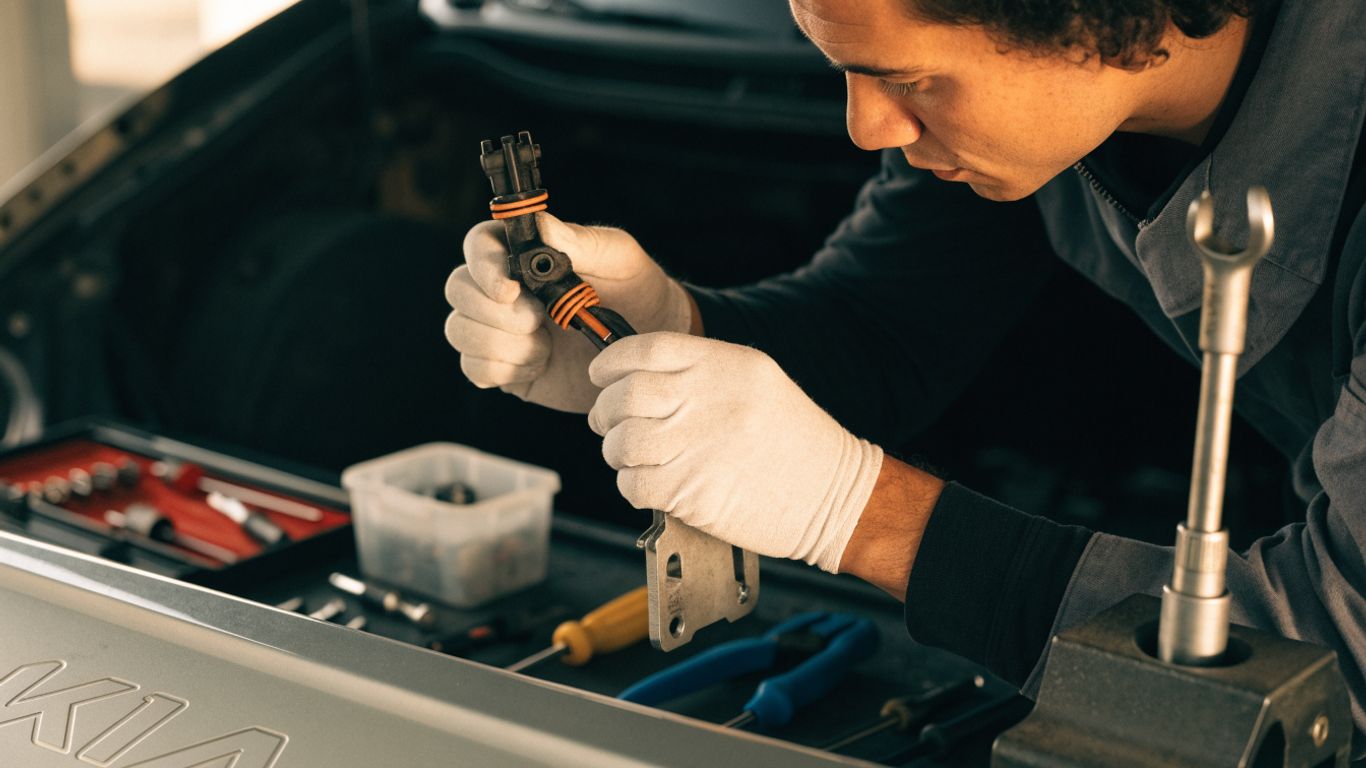
Ask the expert to check fitment against your VIN
Give the expert your VIN and ask them to use it to check fitment, rather than relying only on the model name or a visual match. If you are speaking with a Kia parts specialist, Just Kias focuses on Kia parts, so you can make your vehicle’s make and details clear at the start. When you order online, a car-parts buying guide can also help you keep vehicle details, part numbers, and fitment checks in view.
Clarify whether the part suits your specific variant
Ask the expert to confirm that the part suits your model year, trim, engine, and transmission, where relevant. If there are differences between variants, find out which detail separates the compatible part from a similar-looking alternative. Repeat the identifying information back before you proceed so you both have the same version in mind.
Check what else you may need for installation
Some replacements may require related hardware or components, so ask whether anything else should be checked before you place the order. The expert can explain what is known about the part, while a qualified mechanic can advise on the work needed for your vehicle. This helps you avoid discovering a missing item only after the repair has started.
Compare genuine, aftermarket, and used parts
The right choice depends on your vehicle, the repair, your budget, and what is available. Ask the expert to explain the options in terms you can compare, including condition, price, and any applicable warranty or return terms. You can then weigh the trade-offs without treating one category as automatically best in every situation.
Understand the differences in price and quality
Ask for the price of each suitable option and what that price includes. Genuine, aftermarket, and used parts are different categories, but the label alone does not tell you whether a particular part suits your needs. A simple comparison can keep the conversation grounded in the details you need to decide.
| Part type | What to ask about | Useful comparison point |
|---|---|---|
| Genuine | What is the exact part and price? | Confirm the part number and fitment |
| Aftermarket | Who makes it, and what is included? | Compare specification and warranty terms |
| Used | What is its condition and history? | Ask how it was checked and what is covered |
Use the answers to compare like with like: fitment, stated condition, total price, and any terms that apply. If a point is unclear, ask before deciding rather than inferring quality from the category name alone. A buyer’s guide to Miami luxury condos is a separate kind of comparison; for parts, keep your questions tied to fit, condition, and terms.
Ask about testing and condition for used parts
For a used part, ask what is known about its condition and whether it has been checked or tested. Find out whether the description refers to a visible inspection, a functional test, or other information, and ask what is not known. Photos and identifying numbers can help you confirm that you are discussing the same component.
Check warranty terms and return conditions
Before ordering, ask what warranty applies and what conditions govern a return. Confirm the time limits, any exclusions, and what you would need to do if the part arrives damaged or does not fit. Keep the written terms and order details so you can refer back to them later.
Check delivery, pickup, and support
A suitable part is only useful if you know when and how you can receive it. Ask whether it is available, what delivery options apply to your location, and what support you can expect if there is a problem. If timing matters, say so early and confirm the estimate before you place an order.
Confirm stock availability and estimated delivery times
Ask whether the part is currently in stock or needs to be sourced, and request an estimated dispatch or delivery timeframe. Clarify whether the estimate begins after payment or after the part is confirmed. If you need the vehicle back on the road by a particular date, explain that and decide whether the timing works for you.
Ask about delivery to your location in Australia
Give your suburb or postcode and ask whether delivery is available there, what it costs, and whether the part can be sent to a home, workshop, or another suitable address. Just Kias provides Australia-wide freight for Kia parts, with coverage that includes states and territories as well as New Zealand and Fiji. Make sure the destination and delivery estimate are confirmed for your order rather than assumed.
Find out what support is available if the part does not fit
Before buying, ask who to contact if the part appears incorrect or does not fit, and what information they will need from you. Keep your order confirmation, photos, and vehicle details together in case you need to explain the issue. A general contact page may show how a request is handled, but for a parts order, confirm the seller’s own support and return process directly.
Conclusion
A clear conversation can make finding the right part less stressful: prepare your vehicle details, describe the problem plainly, and confirm fitment, condition, terms, and delivery before ordering. If you own a Kia, call Just Kias on 1800 595 454 to book a live consultation or get parts advice, and have your VIN or registration ready if possible.
Frequently Asked Questions
What details should I have ready before calling an auto parts expert?
Have your VIN, registration, model year, make, and model ready if available. Engine, trim, transmission, photos, and any part numbers can also help identify the right component.
Can I ask for help if I do not know the part’s name?
Yes. Describe where it is fitted, what it looks like, and what symptoms or damage you have noticed. A clear photo and any identifying numbers can help narrow it down.
Is the VIN enough to confirm that a part will fit?
The VIN is a useful starting point, but confirm the part against the vehicle’s relevant variant and details. Ask the expert to explain what information they used to check compatibility.
How do genuine, aftermarket, and used parts differ?
They describe different types of parts, but the best option depends on the vehicle, repair, budget, condition, and available terms. Compare the specific part and its fitment rather than relying on the category alone.
What should I ask about a used auto part?
Ask about its condition, what checks or tests have been done, what is known about its history, and whether any warranty or return terms apply. Request photos or identifying details if useful.
Should I check delivery before I order?
Yes. Confirm stock status, estimated dispatch or delivery time, cost, and whether delivery is available to your postcode. If timing matters, make that clear before committing.
What can I do if the part does not fit?
Contact the seller promptly and explain the issue, providing your order details, vehicle information, and photos if requested. Check the seller’s return and warranty terms before ordering so you know the applicable process.


