

Start with a focused local search
A nearby store is useful only if it carries the kind of part or service you need. When you search for an auto parts store near me, start with your location and the specific job at hand, then check details before setting out. A little filtering can save you a wasted trip.
Use your location settings for nearby results
Check that your device or browser is using the right location, especially if you are searching from work, a hotel, or while travelling. You can also enter a suburb, postcode, or town directly to avoid results being centered somewhere unexpected. A store locator can be another starting point, but verify the address and hours on the store’s own website before you go.
Search by the part or service you need
A search for a particular item, such as a headlight or a replacement belt, may surface different options than a broad search for an auto parts shop. If you need help with diagnosis, include the service you want as well as the part. For Kia owners in Australia, Just Kias focuses exclusively on Kia parts and offers genuine, used, and aftermarket options; its Kia engines, motors and transmissions page also lists body parts.
Check hours, holiday schedules, and distance
Map results are a quick way to compare distance, but displayed hours can be out of date or affected by holidays. Check the store’s own site or call if you are planning a visit close to opening or closing time. A few extra minutes of checking can prevent a long drive to a closed counter.
Compare map listings with store websites
Use the map to identify likely locations, then visit the relevant store page to confirm its address, hours, and services. Look for details that match your actual need rather than assuming every branch offers the same help. If the information is unclear, a quick call is usually more useful than relying on an old listing.
Confirm the part fits your vehicle
A part can look right and still be wrong for your vehicle. Fitment may depend on the model year, engine, trim, or production details, so gather those facts before you compare prices or drive to a store. Taking a moment to confirm the exact fitment can spare you a return trip and the hassle of exchanging the wrong item.

Gather your year, make, model, and engine size
Start with the information in your registration documents or owner’s manual, and include the engine size if you know it. These details give store staff a more useful starting point than the vehicle name alone. Keep the information together so you can share it consistently when checking availability at more than one location.
A short note on your phone is often enough to keep the key details handy:
- Year and model year, if they differ
- Make and full model name
- Engine size or engine type
- Trim or body style, when known
With those details ready, you can ask a focused question and make it easier to compare answers. If you are still unsure, use the VIN as an additional reference.
Use your VIN when fitment details are unclear
The vehicle identification number can help a parts professional narrow down which version of a vehicle you have. Find it on your registration documents or in the vehicle, then read it back carefully when you call or visit. A VIN is especially useful when a model changed during a production year or you do not know the engine details.
Check part numbers and compatibility notes
If you have an existing part, look for a printed or stamped number and share it with the store. Compare that number with the replacement’s listing and read any compatibility notes, including stated exclusions. A matching appearance is not proof of a match, so ask for clarification if the details do not line up.
Ask about options for older or modified vehicles
Older vehicles and modified cars may not match the most common catalogue entry. Tell the staff about non-standard components or changes that could affect fitment, and bring the old part or a clear photo if possible. For a Kia-specific enquiry, Just Kias provides phone support for parts advice and fitment questions.
Compare inventory and pricing
Once you know what fits, compare what is actually available and what the final cost will be. Online listings can help you shortlist options, but stock can change, and the displayed price may not include every charge. A direct check gives you a better basis for deciding whether to travel, collect, or ask about another option.
Check online stock before making the trip
Look for an availability status on the store’s website, then confirm it directly if the part is urgent or the listing is unclear. The following details can help you judge whether the result is worth pursuing:
| Detail to check | What it can tell you |
|---|---|
| Stock status | Whether the listing currently shows availability |
| Store location | Whether the item is associated with the branch you plan to visit |
| Part number | Whether the listing appears to match the item you need |
| Collection details | Whether pickup timing or reservation needs confirmation |
Treat an online stock indicator as a useful lead, not a guarantee that the part will still be waiting when you arrive. Confirm the item and collection arrangements with the store, especially if you are making a longer journey.
Compare brands, warranties, and price ranges
A low price is only one part of the decision. Compare the item’s stated fitment, warranty terms, and any differences in condition or construction, then weigh those against your repair needs. Just Kias offers genuine, used, and aftermarket Kia parts, giving Kia owners in Australia different types of parts to consider for their repair and budget.
Ask whether a special order is available
If the part is not shown as available, ask whether the store can order it and what timing to expect. Confirm the exact part number and whether the quoted date is an estimate. If you are working to a repair schedule, ask what happens if the delivery takes longer than expected.
Confirm the total price, including any core charge
Before agreeing to buy, ask for the full amount due and whether a refundable core charge applies to the old component. Check whether taxes, delivery, or other charges are included in the quote. Getting the total in advance makes it easier to compare like with like.
Find the services you need
Not every parts shop offers the same services, and a service may depend on the branch or the item involved. Decide what would help you complete the repair, then confirm the details before visiting. That way, you can choose a location based on more than its distance from home.
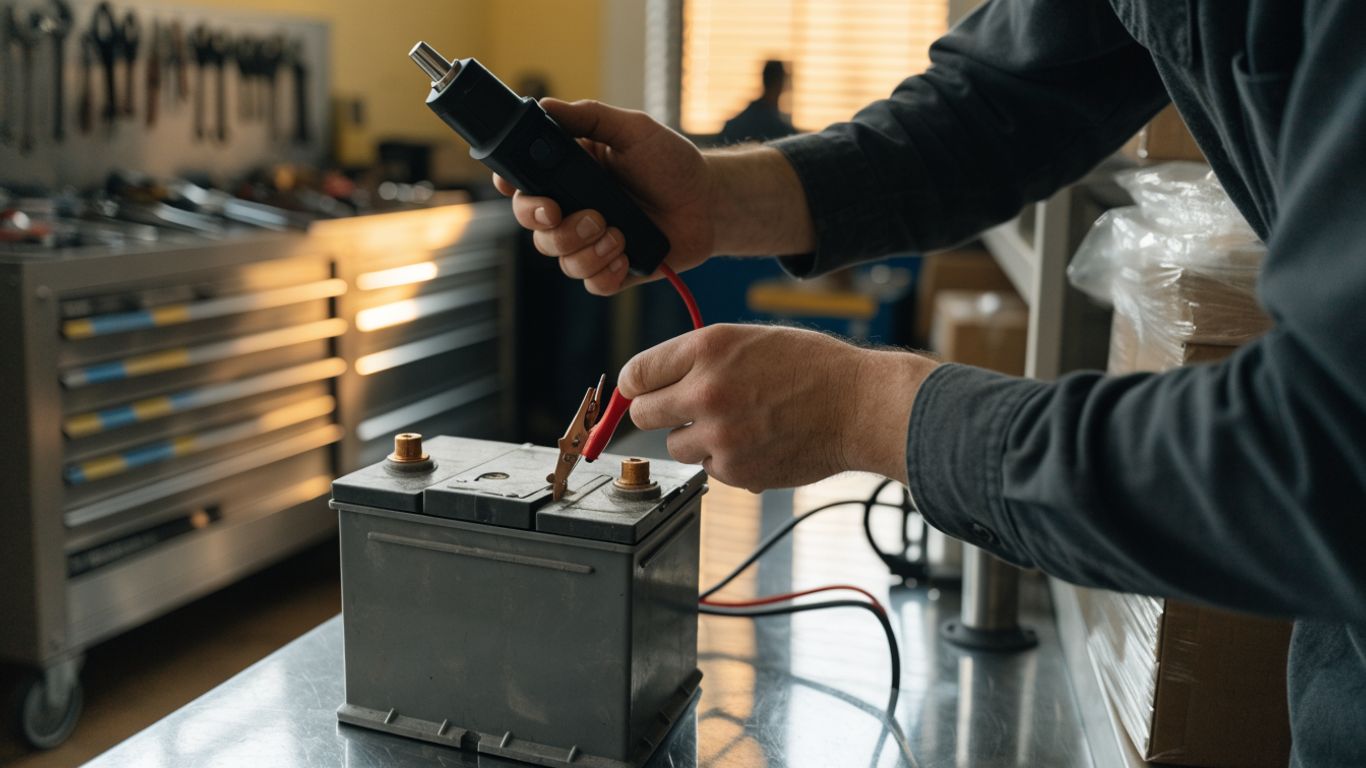
Ask whether staff can test a battery or alternator
If a starting or charging problem has you considering a new component, ask whether the store can test the battery or alternator. Describe the symptoms and any warning lights rather than assuming a failed battery is the only possible cause. Confirm the service is available at the specific location you plan to visit.
Check for tool loan programs
Some stores may have tool loan programs, but the tools offered and the terms can vary. Ask whether the tool you need is available, whether you need to leave a deposit, and how long you can borrow it. Clear answers help you plan the repair and avoid a second trip.
Find out whether installation help is available
Ask what installation assistance, if any, the location provides and whether it covers your particular part. Do not assume that a store selling a component also installs it. If installation is not available, you can plan to arrange the repair separately before buying.
Confirm which services require an appointment
Some checks or services may be handled on a walk-in basis, while others may need an appointment. Call ahead to ask how much time to allow and what information to bring. Confirming this in advance is especially helpful if you have a tight schedule.
Evaluate convenience and customer support
A good choice is not always the closest address. Consider how confidently the store answers your questions, whether you can collect the item in time, and what you will need if the part does not fit. These practical details can matter as much as the initial price.
Call ahead to confirm availability
A call lets you check that the right part is available at the branch you intend to visit and gives you a chance to confirm fitment. Have your vehicle details and any part number ready so the conversation stays specific. If the answer is uncertain, ask what additional information would help verify it.
Check pickup, delivery, and curbside options
Ask which collection or delivery choices are available for the item and location you have in mind. Confirm timing and any conditions rather than assuming the same options apply to every order. For Kia owners in Australia who need parts beyond a local counter, Just Kias offers Australia-wide service and freight options, with phone support and live call booking for parts advice.
Read recent reviews for relevant details
Recent reviews can point to practical issues such as wait times, helpfulness, or how clearly a store communicates. Look for repeated comments that relate to your needs, rather than relying on one unusually positive or negative account. Reviews are personal experiences, so use them as one input alongside direct confirmation.
Ask about return policies and receipt requirements
Before buying, ask how returns work if the part is incorrect or unused and what documentation you will need. Keep the receipt and any packaging until you have confirmed the fit. The written policy is the best reference if you later need to make a return.
Prepare for your store visit
A few simple preparations can make the visit more efficient and help staff identify the right item. Bring the information and evidence you have, even if you are not certain which detail matters most. Before leaving, take a moment to check the part and understand the return terms.
Bring the old part or a clear photo
If the old component is safe and practical to remove, bring it with you. Otherwise, take well-lit photos from more than one angle, including any visible markings or numbers. An accurate reference can help clarify what you need without relying on memory alone.
Take note of warning lights or symptoms
Write down what happened, when it started, and any warning lights you noticed. Include details such as whether the issue occurs only when the engine is cold or during a particular kind of driving. These observations can help keep the conversation focused, though they do not replace a proper diagnosis.
Keep your vehicle information and VIN handy
Have your year, make, model, engine details, and VIN ready, whether you are speaking with staff in person or by phone. Check that the VIN is copied accurately before sharing it. If you have already identified a possible part number, keep that alongside the vehicle information.
Verify the part and return terms before leaving
Compare the part number and packaging with the information you were given, and ask about any fitment note that remains unclear. Make sure you have the receipt and understand the return conditions before you drive away. A final check is a small step that can save time later.
Conclusion
Finding the right parts store starts with a clear description of your vehicle and what you need, then continues with careful checks on fitment, stock, services, and return terms. Confirm the details with the store before travelling, and bring your vehicle information and any useful part references along. A little preparation makes it easier to choose a practical option with confidence.
Frequently Asked Questions
How do I find an auto parts store near me?
Search by your location and the part or service you need, then confirm the address, hours, and availability through the store’s own website or by phone.
What vehicle details should I have before calling?
Have the year, make, model, and engine size ready if available. Your VIN and the part number can also help clarify fitment.
Can I rely on online inventory information?
Online listings are useful for narrowing your options, but stock can change. Contact the store to confirm the specific item is available before making the trip.
What is a core charge?
A core charge is an additional amount that may apply to certain parts when the old component is not returned. Ask whether it applies and what the return conditions are.
Should I bring the old part to the store?
If it is safe and practical to remove, bringing the old part can help with comparison. If not, take clear photos and note any visible part numbers.
Do auto parts stores install the parts they sell?
Services vary by store and by part. Ask the specific location whether installation help is offered and whether you need an appointment.
What should I check before leaving with a part?
Verify the part number and fitment details, keep your receipt, and make sure you understand the return policy and any core-charge terms.


